
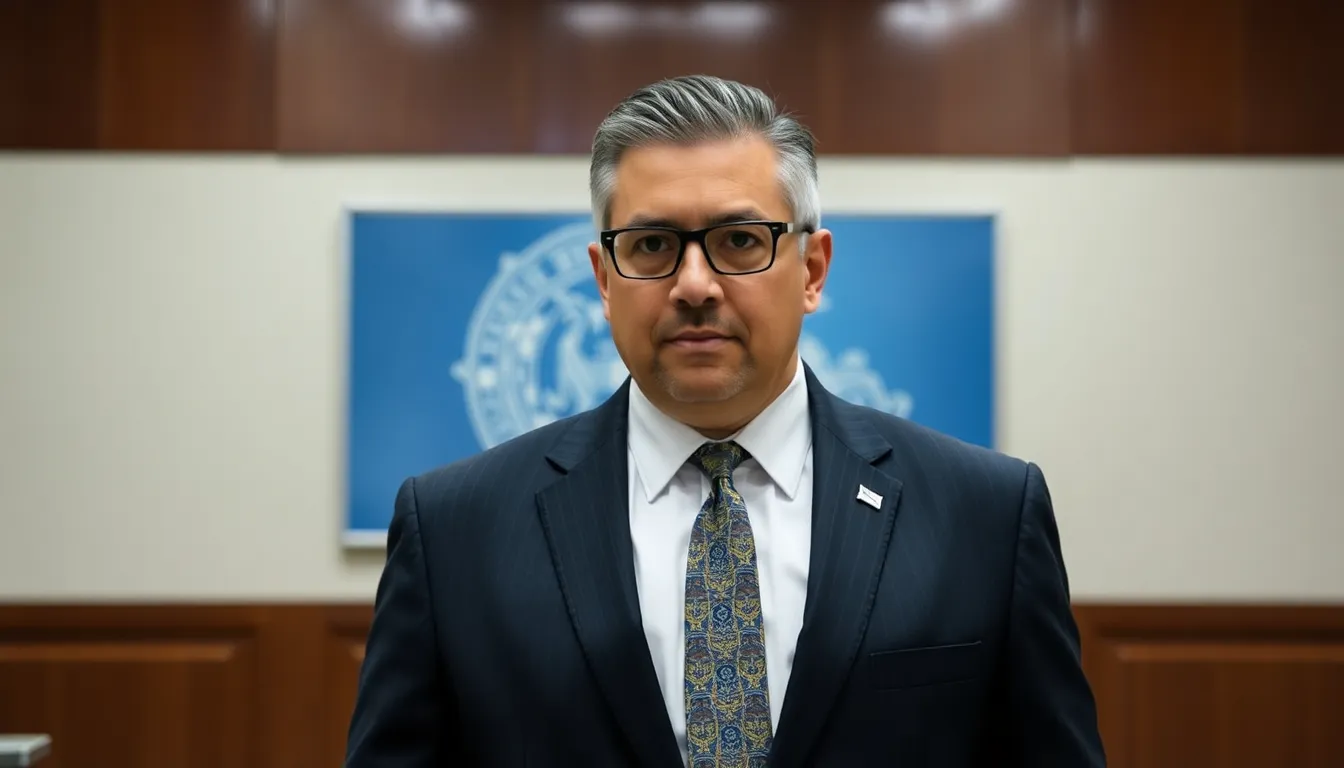
The federal trial for former Florida congressman David Rivera began Monday in Miami, where he faces charges for allegedly lobbying on behalf of a sanctioned Venezuelan tycoon without registering as a foreign agent. Rivera, who served from 2011 to 2013, is accused of working as an agent of Raul Gorrin Belisario, a Venezuelan national who the Treasury Department said played a role in a “corruption scheme” to bribe the national treasurer of Venezuela. The case centers on allegations that Rivera violated the Foreign Agents Registration Act by failing to register his lobbying activities with the U.S. government.
According to the grand jury indictment, from 2019 to 2020, Rivera “sought to lobby senior U.S. government officials,” including a senior official in the executive branch, to remove sanctions against Gorrin. Rivera allegedly received $5.5 million for his efforts to influence Washington’s policy toward Venezuela during former President Donald Trump’s first term. The indictment also claims that from 2019 to 2020, Rivera created shell companies “to conceal and promote his crimes.”
Rivera has “denied any illegal lobbying on behalf of Venezuela’s government” and “pleaded not guilty” to all charges after his arrest in December 2022. His legal team argues that his contacts and conversations in Washington between 2017 and 2018 were aimed at exploring avenues to provoke political changes in Venezuela and weaken the control of chavismo, not to support it. Rivera has also countersued deposed leader Nicholas Maduro’s opponents in federal court.
Secretary of State Marco Rubio appears on the list of 30 potential witnesses who may be called to testify during the proceedings in the Southern District of Florida. Rubio, Rivera’s former roommate during their early political careers in Tallahassee, has maintained a critical stance against the governments of Cuba and Venezuela for years, publicly denouncing both regimes. The inclusion of the current head of U.S. diplomacy has garnered particular attention due to his long political relationship with Rivera, dating back to the 1990s when both emerged as young Republican figures of Hispanic origin in Florida politics.
Federal prosecutors allege Rivera operated as part of an “operation to persuade the Trump administration to ease sanctions” against the Venezuelan government while opening doors for major American energy companies to return to the South American nation’s oil market. The investigation indicates Rivera signed a consultancy agreement for $50 million with a U.S. subsidiary of the Venezuelan state oil company PDVSA, receiving an initial payment of $5 million. According to court documents, Rivera allegedly attempted to convince U.S. authorities that the Maduro government was willing to negotiate “legitimate elections.”
Rivera will be tried alongside his alleged associate, former political consultant Esther Nuhfer, who is also accused of participating in the failed lobbying efforts. The case has implicated several influential figures in the U.S. political landscape, with names mentioned in judicial documents including current White House Chief of Staff Susie Wiles, former presidential advisor Kellyanne Conway, Republican Congressman Pete Sessions, and lobbyist Brian Ballard. Federal authorities have seized $24 million and five properties related to the investigation.
The former congressman, born in New York in 1965 to Cuban parents, moved to Florida in 1974 and studied Political Science at Florida International University. Rivera served in the Florida House of Representatives from 2002 to 2010, where he chaired the rules committee and later the appropriations committee, sponsoring a measure that prohibits Florida’s higher education institutions from funding research trips to Cuba. He represented Florida’s 25th Congressional District in the U.S. House of Representatives from 2011 to 2013.
Jury selection for the federal trial began March 16 in a federal court in South Florida, with the proceedings expected to reveal details about foreign influence attempts in Washington during the Trump administration. The trial is scheduled to begin at 9 a.m. with testimony from top government officials expected to take the witness stand throughout the proceedings.