
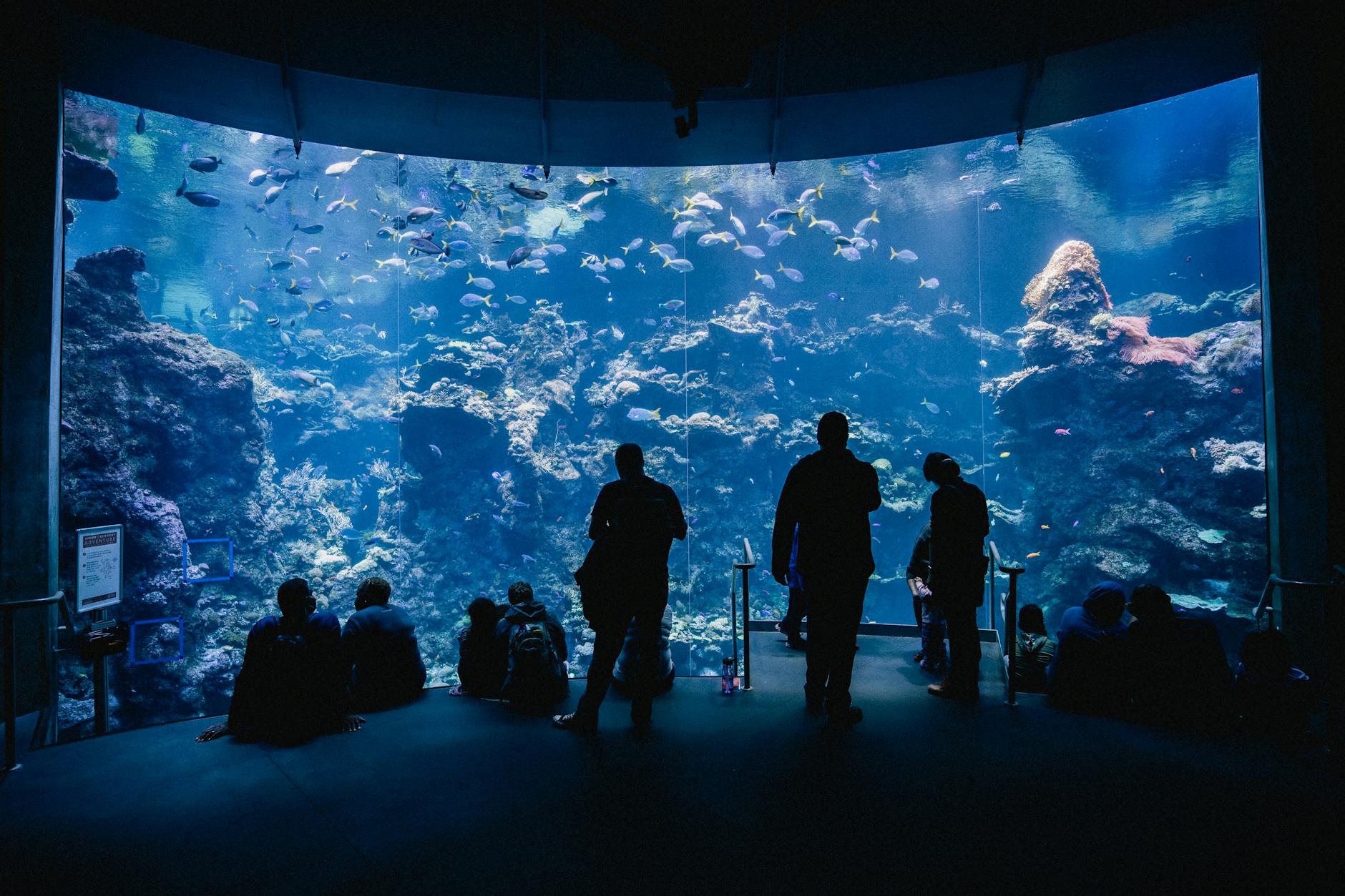
The Florida Aquarium in downtown Tampa will receive a donated flood barrier system to protect its 20,000 animals from future hurricanes and storm surge, city leaders announced Tuesday. Aquafence is donating the flood mitigation system following damage from Hurricanes Helene and Milton during the 2024 hurricane season. Tampa General Hospital and Strategic Property Partners, the developers behind Water Street Tampa, are helping pay for the installation.
“After Hurricane Milton and Helene, it became clear that the aquarium is very vulnerable and needed additional layers of protection,” said Patrick Hansen, chief revenue officer for Aquafence. “Today, I am proud to announce that Aquafence is stepping forward to help protect this treasured institution.” Hansen said the barrier is “designed to safeguard the animals, the habitat, the staff and of course its mission.”
“Helene really tested us and challenged us. As well as Milton,” said Roger Germann, president and CEO of The Florida Aquarium. “So, we took those signs to say let’s not just leave our goodwill and our mission and our purpose to Mother Nature’s good graces. We need to do a little bit better to protect the Florida Aquarium.” The flood barrier system is similar to the Aquafence system used at Tampa General Hospital that protected the facility during Hurricane Helene.
“So, when we were asked to participate in bringing the Aquafence to the aquarium, it was an easy, yes,” said John Couris, CEO of Tampa General Hospital. The City of Tampa owns the aquarium building and has already invested heavily in the site. In 2024, Tampa’s Community Redevelopment Agency approved $15 million toward the aquarium’s $45 million expansion project, which includes new exhibits and upgraded facilities.
“We want to make sure we protect these animals, this facility, this infrastructure. It’s critically important,” Germann said. “We are building one of the greatest expansions in our history since opening our doors 30 years ago and your investment is safe because Aquafence is the only protection barrier that we have to make sure that this brand new facility, these brand new exhibits are protected.” The aquarium is currently in the middle of one of the largest expansion efforts in its 30-year history.
Mayor Jane Castor said the aquarium represents part of a broader resiliency effort across Tampa. The city has invested about $350 million in stormwater improvements since 2019 and has made resiliency a major focus of its $1.9 billion budget plan. “We are constantly and year-round, not just in hurricane season, looking at how we can become more resilient as a community,” Castor said.
Tampa’s vulnerability stems from its extensive coastline and storm surge exposure. The city has 126 miles of shoreline and remains highly vulnerable to storm surge. “And so, if we get any type of a storm surge, which is often the most dangerous part of any storm, we have a lot of vulnerability,” Castor said. City leaders noted that evacuating the aquarium’s roughly 20,000 animals ahead of a major storm is not realistic, making flood protection especially important.
“Could you imagine if you had to evacuate the Florida Aquarium? I mean, that’s just not possible,” Castor said. “So, you have to think outside the box and come up with those solutions that will protect all of our assets.” The city continues to focus on drainage improvements and flood protection projects, including ensuring “that we have the stormwater systems that are in place and operable to move water out of neighborhoods.”
Among Tampa’s ongoing flood mitigation projects is a $6.9 million flood relief project along South Manhattan Avenue in South Tampa, where crews will upgrade pipes, add drainage inlets and improve water and wastewater systems. The city is also planning a $98 million South Howard flood relief project and nearing completion on a $57 million Lower Peninsula Watershed project. “We’ve done a number of major stormwater projects throughout the city in the last seven years. And we have one more in our strategic plan, which is South Howard,” Castor said.
Officials expect the Aquafence system to be ready for deployment later this hurricane season.