
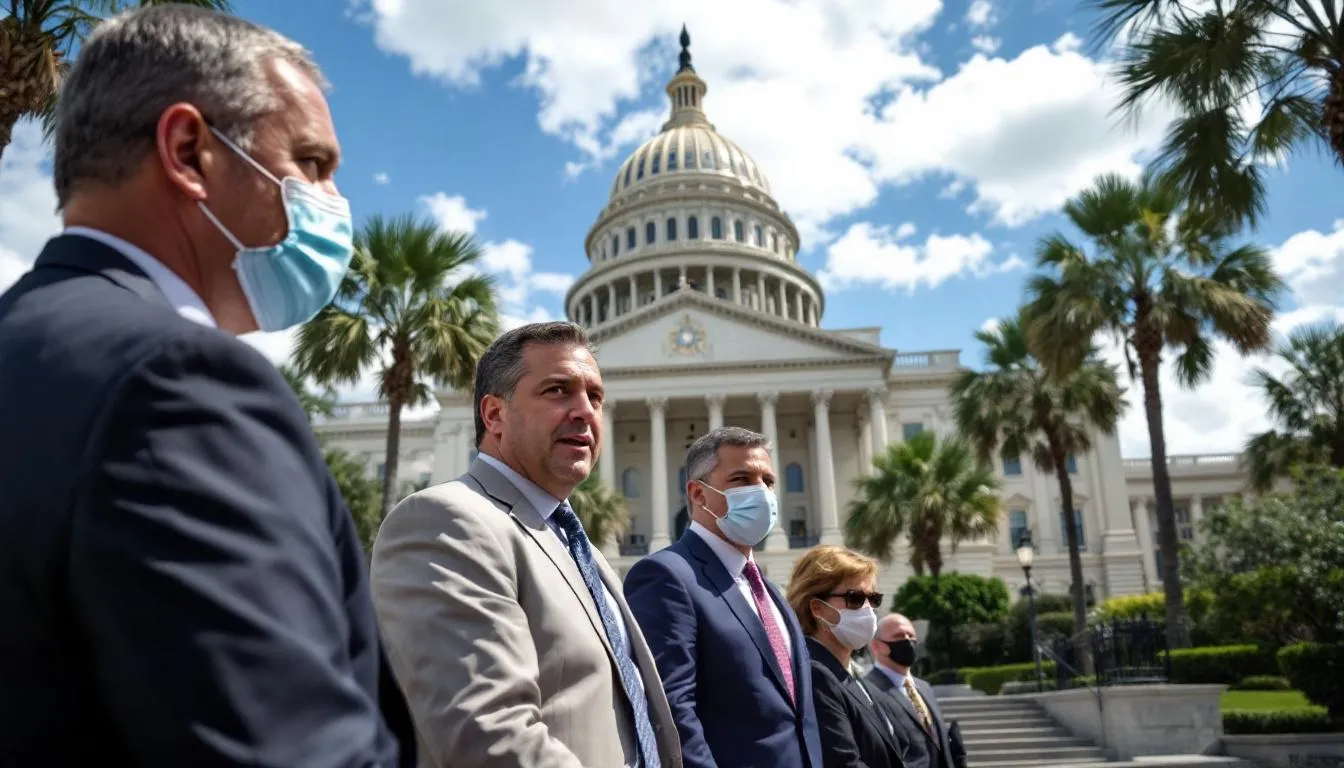
Florida lawmakers took rare unanimous action to fund the state’s AIDS Drug Assistance Program after more than 10,000 Floridians living with HIV-AIDS were told they would be cut off from medication access. The gap funding measure, supported by Democrats, Republicans and Gov. Ron DeSantis, will help about 16,000 Floridians keep access to HIV-AIDS medication through the end of June.
“Without these medications people will get sick will end up in the hospital,” said South Florida resident Michael Rajner, who has been living with HIV-AIDS since 1995 and returned from Tallahassee after helping push for the funding measure. Rajner emphasized the critical nature of maintaining medication access for HIV-positive individuals across the state.
Earlier this year, the Florida Department of Health announced it was cutting eligibility for the program, citing a $120 million shortfall driven by rising insurance premiums and federal funding cuts. The AIDS Healthcare Foundation filed a lawsuit in response to the proposed cuts, highlighting the urgent need for continued funding.
“The cost of treating patients who come in to emergency rooms across the state is so much higher,” said AHF spokesperson Esteban Wood. Wood emphasized that emergency room treatment costs far exceed the expense of maintaining patients on their regular medication regimens through the assistance program.
However, advocates warn the current solution is temporary. “This bridge funding, this band aid, is only getting us through June 30th. Long term stability is the solution,” Wood said. The funding measure provides only short-term relief while lawmakers work toward a more permanent solution in the state budget process.
The funding cuts have already impacted HIV prevention programs across Florida. Robert Boo, who has been dealing with federal funding cuts to HIV prevention programs at the Pride Center in Wilton Manors, described the situation as severe. “It’s been devastating,” Boo said, noting that services including free and confidential HIV testing and linkage to care have been affected by staff layoffs and increased reliance on donations.
Rajner stressed the public health importance of keeping people in the program to prevent virus transmission. “An individual who is compliant with their HIV treatment the virus is un-transmittable,” he said. This medical principle, known as undetectable equals untransmittable, makes medication access crucial for both individual health and community prevention efforts.
Broward and Miami-Dade counties lead the state in HIV cases, according to Rajner, making South Florida a critical focus area for the program. The concentration of cases in these counties underscores the importance of maintaining medication access for residents in the region.
The AHF spokesperson noted that a large portion of funding for the AIDS Drug Assistance Program comes from drug rebate programs. These rebate programs help offset the cost of medications, but rising insurance premiums and federal funding cuts have created the current shortfall situation.
Activists like Rajner plan to return to Tallahassee in April as lawmakers work on a new state budget. The April legislative sessions will be crucial for determining long-term funding solutions beyond the temporary gap funding measure that expires June 30.