
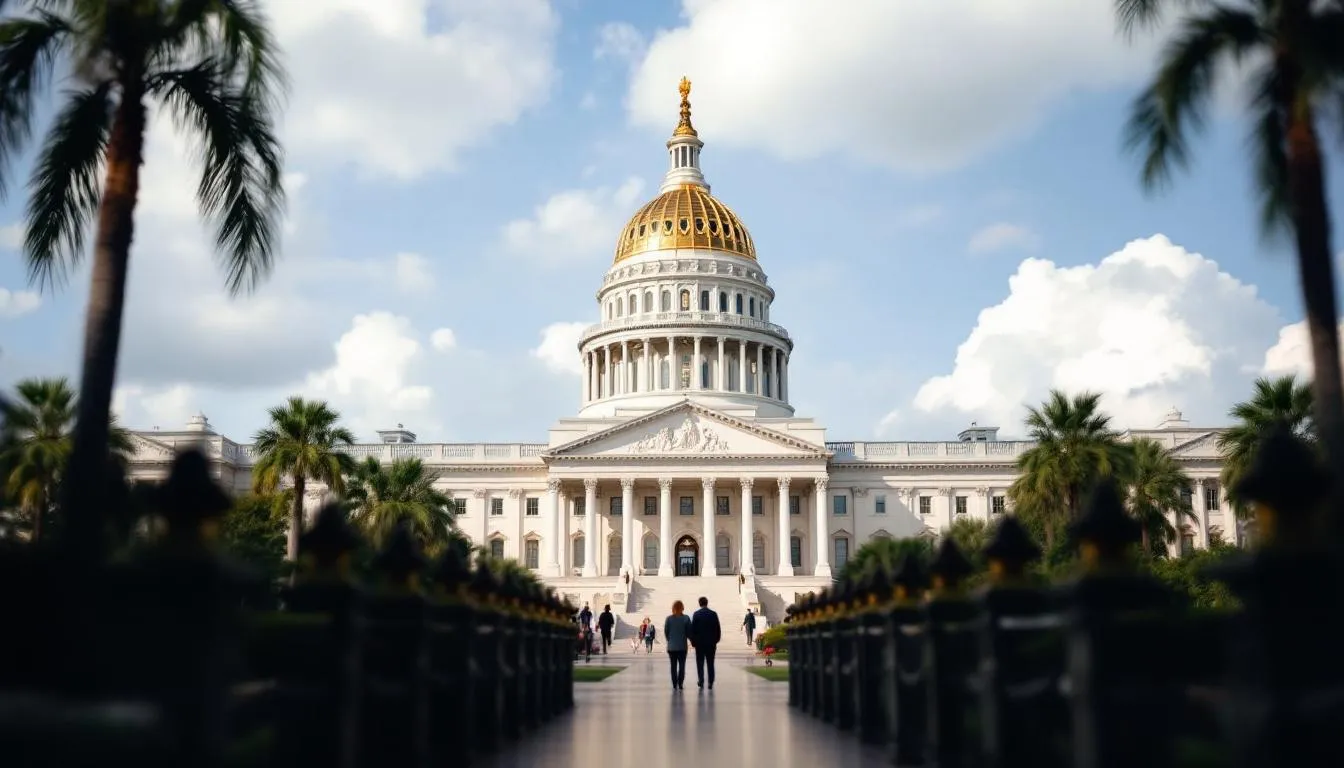
TALLAHASSEE — Florida lawmakers have failed to pass a budget within their regular 60-day session for the second consecutive year, forcing costly special sessions that have totaled $4.85 million since 2000. The state’s 23 million residents and $115 billion budget may have outgrown the part-time legislative structure established more than a century ago.
“It is structurally set up to fail,” said Bob Jarvis, a law professor at Nova Southeastern University in Fort Lauderdale. “That’s the problem with a 60-day session. Florida is too big, its problems too complex, to have a part-time Legislature.” The Legislature must approve a balanced budget by July 1 or face a partial government shutdown.
Senate President Ben Albritton said lawmakers would return after Passover ends April 9 to hash out the budget, though he hasn’t issued an official proclamation. Last year’s budget impasse required an extra 45 days at a cost of nearly $260,000 on top of the regular session expenses. The Legislature is already scheduled to reconvene April 20 for a special session called by Gov. Ron DeSantis to redraw congressional maps, with a likely third special session on property taxes.
“The antiquated sixty-day session limit no longer provides lawmakers with sufficient time to devise, deliberate, and determine solutions for most of the complicated issues they are asked to address,” said Peverill Squire, a political scientist at the University of Missouri who co-wrote “State Legislatures Today: Politics Under the Domes.” “The need to call special sessions indicates that regular sessions no longer meet the state’s needs.”
Florida operates under a hybrid legislative model, where lawmakers work up to two-thirds of a full-time week on legislative tasks but may not receive a living wage. Only 10 states maintain full-time legislatures where lawmakers dedicate at least 80% of a full-time schedule and receive livable wages exceeding outside employment needs. California, New York and Pennsylvania pay their state legislators more than $100,000 annually, with sessions lasting six months to a full year.
The state’s part-time citizen legislature dates to before the Civil War, when Florida was a sparsely populated agricultural outpost spanning 66,000 square miles. The Legislature met every other year for over 100 years before shifting to annual sessions in 1969 following voter approval of a new constitution sparked by a budget crisis. At that time, Florida’s population was 6.6 million, compared to today’s 23 million residents who trail only California and Texas.
“The job doesn’t end when you leave Tallahassee,” said Sen. Lori Berman, D-Boca Raton. “It starts when you get home to the constituents. They’re the ones who elected us.” Florida’s 40 state senators each represent more than 500,000 constituents, while the 120 House members represent close to 200,000 residents each.
Florida’s legislative compensation structure weeds out residents who cannot afford to serve in what amounts to part-time positions. The New Jersey Legislature voted in 2024 to give members their first raise in 25 years, a 67% increase boosting salaries from $49,000 to $82,000 annually — almost three times what Florida lawmakers earn. Another 14 states operate part-time legislatures where lawmakers work about half of a full-time equivalent and receive minimal compensation.
The state now grapples with complex issues including housing affordability, high property insurance costs and medical care expenses that plague many Floridians. Modern Florida features nine major professional sports teams, 12 state universities, housing developments built on former citrus groves, and Orlando billing itself as the “theme park capital of the world.” These challenges represent a dramatic shift from the agrarian economy that existed when the legislative structure was established, when citrus was a billion-dollar industry and the Magic Kingdom had barely begun construction in western Orange County.
Lawmakers will reconvene after April 9 to complete budget negotiations, with the July 1 deadline looming for the new fiscal year to begin without a government shutdown.