
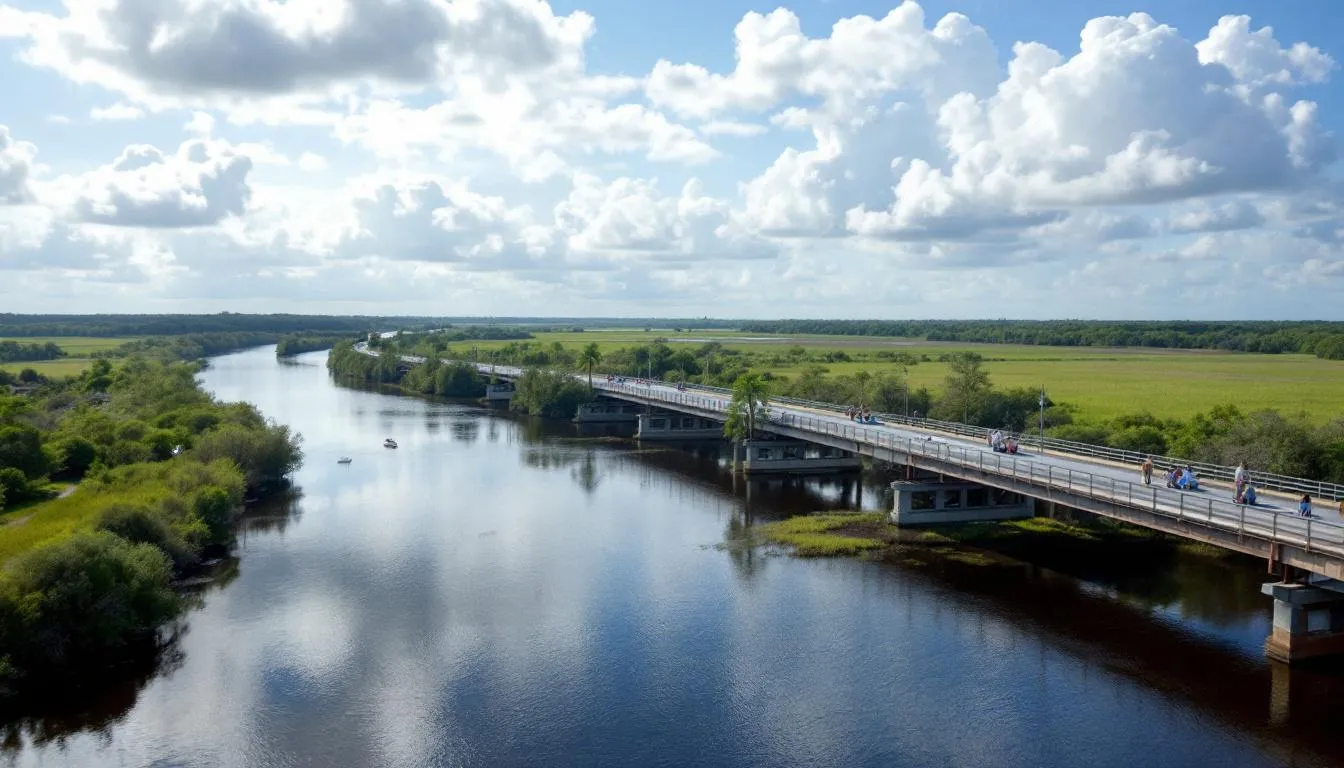
Florida lawmakers failed to pass legislation supporting a $70 million project to restore the Ocklawaha River by opening the Kirkpatrick Dam before the legislative session ended last week. The measure had passed the Florida House and was awaiting a Senate vote when the session concluded. The proposed four-year project would have addressed environmental damage caused by an abandoned canal project from decades ago.
“By removing the dam, we would reunite the waters,” said Nina Bhattacharyya, executive director of Florida Defenders of the Environment. “We would have springs reemerge. Wildlife would be able to move back and forth — migratory fish, manatees and so much more. Removal of the dam would really fix a wrong that was created decades ago.”
The 7,200-foot Kirkpatrick Dam was built as part of the Cross Florida Barge Canal, which was intended to serve as Florida’s version of the Panama Canal. The project would have created a shortcut for boats to pass through the middle of the state from the Atlantic Ocean to the Gulf instead of navigating around the peninsula. However, work on the canal was stopped in 1971 over environmental concerns.
The dam and its associated Rodman Reservoir have caused significant environmental damage in northeast Florida since construction. The reservoir has drowned a chunk of the Ocala National Forest, put 20 springs underwater and disrupted wildlife crossings, including some used by migrating manatees. The artificial water body has fundamentally altered the natural flow between the St. Johns and Ocklawaha rivers and Silver Springs, one of the largest spring systems in the United States.
Every couple of years, state workers empty the reservoir to clean out muck, temporarily revealing the submerged landscape. During these drawdowns, the lost springs reemerge and cypress saplings begin growing on previously submerged land, allowing the area to return to its natural state for several months. The latest drawdown of Rodman Reservoir, the first in six years, started in October and ended in early March.
Advocates for restoring the river said they plan to regroup and identify the best strategy for moving forward despite the legislative setback. Environmental groups remain optimistic given how close the measure came to passage, having successfully navigated through the House before stalling in the Senate. The failure represents the latest in decades of attempts to address the environmental damage caused by the abandoned canal project.