
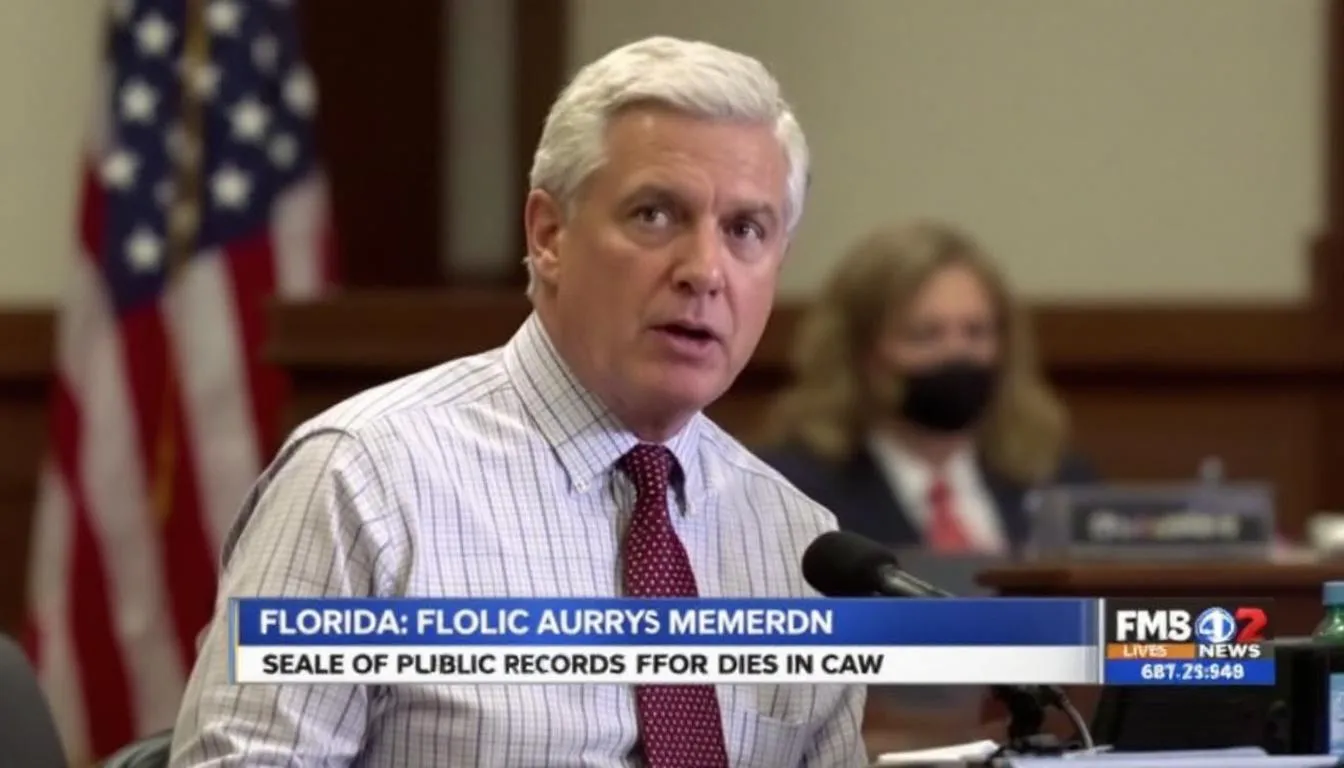
Florida’s regular legislative session concluded without enacting a potent public records reform bill that the House had approved 111-0, leaving government transparency advocates frustrated as officials continue to ignore sunshine law requirements. CS/HB 437 contained enforceable deadlines, limits on costs and meaningful financial penalties for scofflaws but died on adjournment in the Senate, where leadership had placed it in three committees that were not meant to take it up.
“The default position is now ignore, delay, deny,” said Bobby Block, director of the Florida First Amendment Foundation. Block says secretive officials are exploiting the weakened finances of the news media, their advertising revenues having been hollowed out by the internet. It can be costly to sue for public records, so litigation is less likely, and reimbursement isn’t guaranteed.
The bill’s sponsor, Rep. Alex Andrade, R-Pensacola, had exposed how Gov. Ron DeSantis’ chief of staff laundered $10 million in Medicaid money into DeSantis’ political advertising campaign against a 2024 recreational marijuana initiative. There appears to be a grand jury report on that which has yet to be released, with one of Florida’s “shade” laws allowing someone who’s not indicted to contest a grand jury’s criticism. It’s not clear whether the bill’s death owed more to mutual dislike between the two chambers, institutional opposition from the Florida Sheriffs Association and other public officials, or the influence of DeSantis, described as the most secretive chief executive in Florida’s modern history.
Florida has the nation’s strongest government-in-the-sunshine laws, but the Legislature has riddled them with more than 1,000 exemptions. An ABC News inquiry into the Florida prison system is still waiting three years later for the desk calendar of the secretary of corrections. The Lee County Port Authority told a private citizen there would be a $391,000 charge for a set of documents, illustrating how prohibitive fees have become a barrier to transparency.
“Government in the Sunshine isn’t just for the media. It’s for everyone. Citizens need it to keep their local governments honest. But they’re even more likely than the media to be met with resistance to public record requests and even less able to afford the fees,” according to transparency advocates. The importance of public records to public integrity underlay a key element of Gov. Reubin Askew’s 1976 “Sunshine Amendment” initiative, an ethics code that requires public officials to disclose their personal finances. Askew saw that reporting as preventing misdeeds more than exposing them.
The problem extends beyond Florida, with darkness descending in other states and spreading in the federal government, where delay has become a default. Federal Freedom of Information Act requests to U.S. agencies are going unmet, with a Washington Post analysis noting 26 lawsuits involving 13 agencies where government attorneys replied that there were too few remaining FOI officers to provide timely disclosure. The Federal Freedom of Information Act was modeled on Florida’s sunshine laws, making the state’s retreat from transparency particularly significant for national open government efforts.
More and more officials are simply ignoring the law, with requests for public documents going unanswered for weeks, months, even years. When they do bother to reply, they may pose prohibitive charges for copying the material. Block noted that secretive officials understand that weakened news organizations are less likely to pursue costly litigation to enforce public records laws, creating an environment where transparency violations face little consequence.
The failed reform bill would have established meaningful enforcement mechanisms that advocates say are desperately needed to restore Florida’s reputation as a leader in government transparency. Without legislative action, citizens and journalists will continue facing delays, denials and excessive fees when seeking public records that should be readily available under Florida’s sunshine laws.