
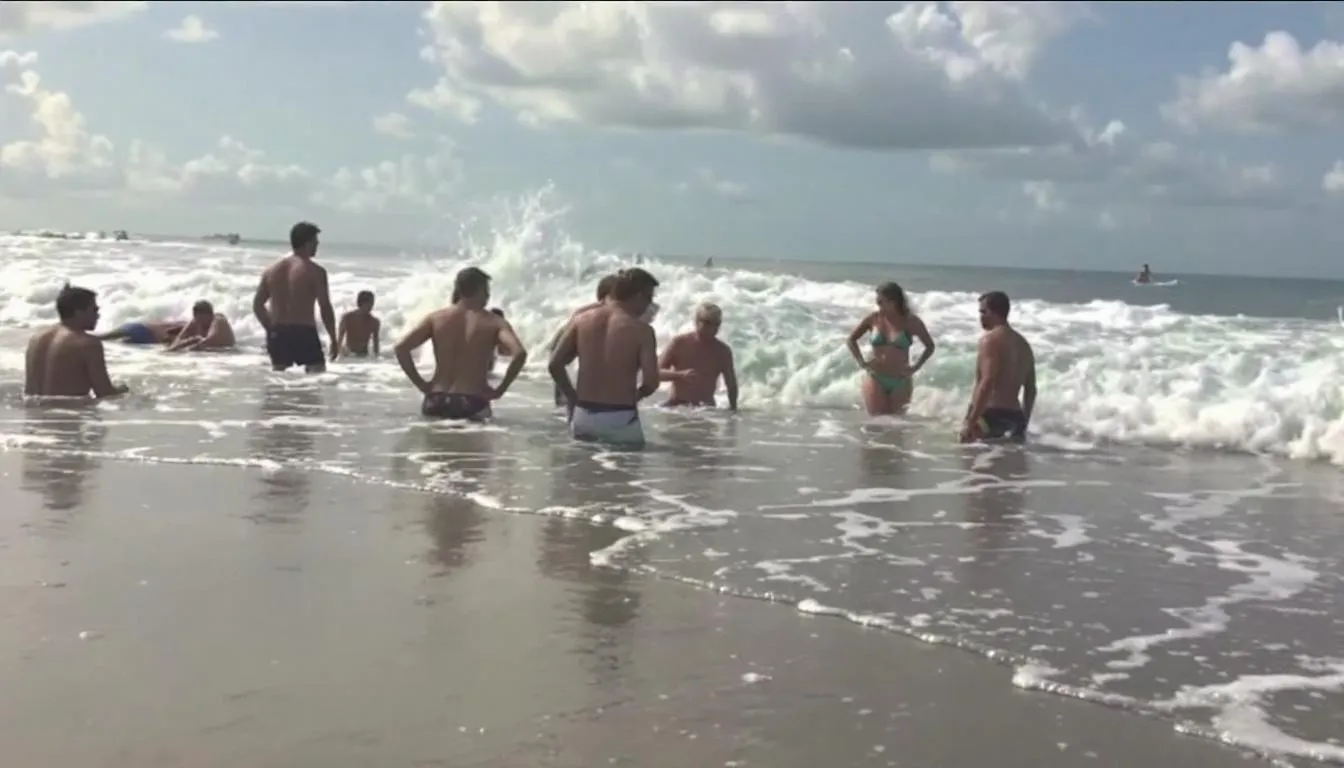
Fort Lauderdale Fire Rescue saved 14 people from dangerous rip currents in seven separate incidents Sunday as high-risk conditions continued to affect South Florida beaches. The rescues came one day after fire rescue teams pulled 34 people from the water in 18 separate incidents Saturday, highlighting the ongoing threat posed by treacherous ocean conditions.
The National Weather Service has designated Miami Beach, Fort Lauderdale and Palm Beach as high-risk areas for rip currents. Areas in Northern Florida also face high-risk conditions for the dangerous ocean phenomena that can quickly pull swimmers away from shore.
“Red and Purple flags for Man of War Sea Pests and rough ocean conditions with rip currents,” the City of Fort Lauderdale said in a statement. “Remember that the ocean is a dynamic environment that is constantly changing. For up-to-date beach safety information, please consult the Lifeguards on the guarded section of Fort Lauderdale Beach.”
The weekend’s rescue operations underscore the persistent danger facing beachgoers along Florida’s Atlantic coast. Fort Lauderdale Fire Rescue responded to nearly twice as many incidents Saturday compared to Sunday, with rescue teams working multiple scenes simultaneously to reach distressed swimmers. The 48 total rescues over two days represent a significant strain on emergency resources during what should be a routine spring weekend.
Rip currents form when waves break over sandbars or other underwater features, creating narrow channels of fast-moving water that flow away from shore. These currents can move at speeds up to 8 feet per second, faster than an Olympic swimmer, making them particularly dangerous for inexperienced ocean swimmers. Florida leads the nation in rip current fatalities, with an average of 21 deaths annually according to the National Weather Service.
The presence of Man of War sea pests adds another layer of danger to current beach conditions in Fort Lauderdale. These jellyfish-like creatures deliver painful stings that can cause welts and, in rare cases, serious allergic reactions. The combination of dangerous marine life and hazardous surf conditions prompted officials to fly red and purple warning flags along the coastline.
Fort Lauderdale Beach maintains a guarded section where lifeguards provide real-time safety information and immediate response capabilities. City officials emphasized that ocean conditions change rapidly and encouraged beachgoers to check with lifeguards before entering the water. The dynamic nature of coastal environments means that conditions can deteriorate quickly, even on days that appear calm from shore.
Beach safety experts recommend that swimmers caught in rip currents should not attempt to swim directly back to shore against the current. Instead, they should swim parallel to the shoreline until they escape the current’s pull, then swim at an angle back toward the beach. Those unable to swim out of a rip current should float or tread water while waving and calling for help.
The National Weather Service continues to monitor coastal conditions and will update rip current risk assessments as weather patterns change. Beachgoers planning to visit Fort Lauderdale, Miami Beach, Palm Beach or Northern Florida beaches should check current conditions and heed all posted warnings before entering the water.