
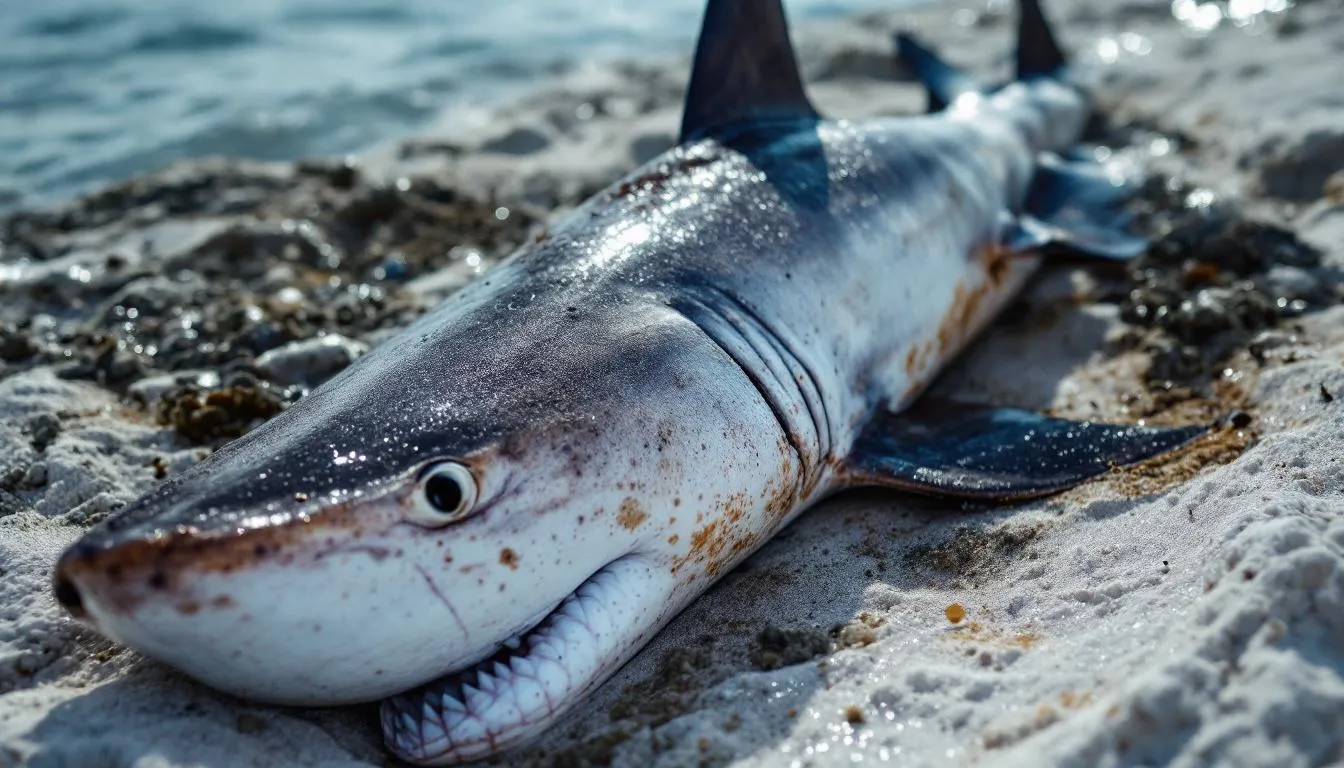
Three critically endangered great hammerhead sharks have been found dead on Florida beaches in recent weeks, with at least two showing evidence of having their fins removed by poachers. The Florida Fish and Wildlife Conservation Commission discovered a great hammerhead shark dead on Juno Beach on March 15 with its fin and tail removed, prompting a $5,000 reward for information leading to an arrest. Two weeks later, wildlife activists reported a second great hammerhead found dead on Hobe Sound Beach, followed by a 300-pound specimen discovered on Naples Beach.
“When I see a critically endangered shark that was needlessly killed for a trophy picture or to sell its fins, it’s heart-wrenching to me,” said Jim Abernethy, a local shark expert and conservationist. “I’ve been blessed to be able to live an entire life swimming and showing people the beauty of these magnificent creatures, and to me, it’s like killing a family member.” Great hammerhead sharks are a protected species in Florida, making it illegal to harvest them in state waters.
The Naples Beach shark was collected by scientists using heavy machinery so the Florida Fish and Wildlife Conservation Commission could conduct a necropsy to determine the cause of death. Christian Hernandez captured footage of the estimated 300-pound shark being placed via crane onto a transport truck. “I’ve been living here in Florida ever since the 60s… I’ve seen sharks but nothing the size of that,” said Naples resident Frederick Pulice.
Abernethy explained that sharks are often killed by unethical fishermen for their fins or photographs, driven by the lucrative shark fin soup market. Between 75 and 250 million sharks per year are killed for shark fin soup globally, according to Abernethy. “The uses for the fins themselves are for the huge drive for shark fin soup. A fin is worth a lot of money, and sadly, that has caused the demise,” he said. “The largest eradication of any animal on the planet by humans is the shark.”
Great hammerhead sharks can measure to nearly 20 feet and are globally listed as critically endangered. According to the Florida Fish and Wildlife Conservation Commission, removing parts of the animal and leaving the carcass behind is a serious violation of state law. Prohibited shark species like great hammerheads must remain in the water with gills submerged when fishing from shore or vessel.
“This isn’t everybody. This is just the ones that don’t care,” Abernethy said about unethical fishermen. “They’re interested in one thing, in my opinion, and that’s the trophy picture on the beach for their Instagram pages. But these unethical fishermen are not concerned about the future of that critically endangered species, or the health of our oceans, or the safety of the people who will be on the beach the following day.”
Abernethy emphasized the critical role sharks play in ocean ecosystems and called for stricter enforcement of existing laws. “Whether you like sharks or hate sharks, it’s critical that we all join forces and protect them,” he said. “The role of the shark in the ecosystem is to maintain the health and balance of our oceans. Without healthy oceans, all populations will die, including humans.” He stressed that anglers must immediately cut the line when they realize they’ve caught an endangered species.
“A law in place with no enforcement is a worthless law,” Abernethy said, calling for increased nighttime enforcement by FWC at locations where these incidents occur. He has started a campaign urging the Florida Fish and Wildlife Conservation Commission to enforce existing laws before more sharks are killed. “The laws are worthless if they don’t enforce them, as well as issue tickets with an expensive fine. Otherwise, the future of great hammerheads and other endangered animals on our planet will go extinct.”
FWC investigators continue investigating the Juno Beach incident and are asking for public assistance. Anyone with information about the shark killings is urged to contact the Wildlife Alert Hotline to help authorities identify those responsible for these violations of state wildlife protection laws.