
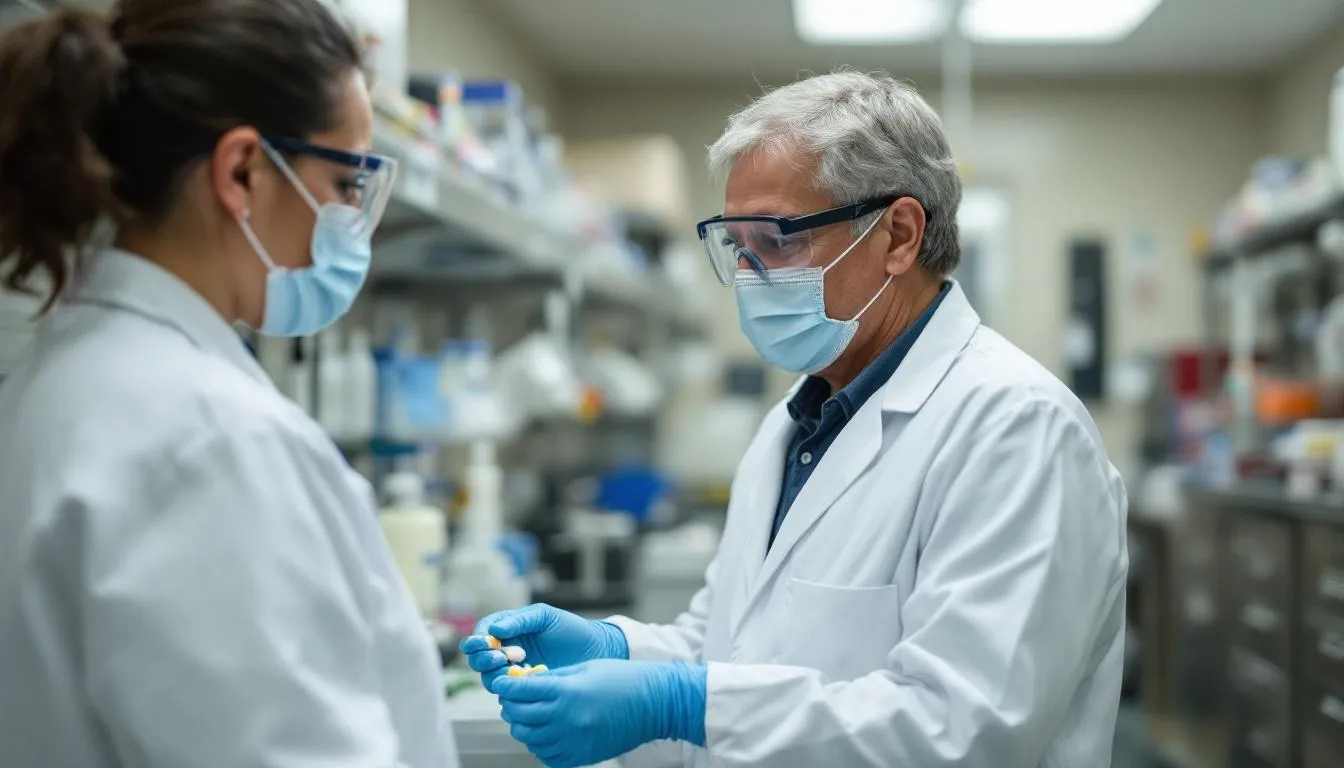
Jacksonville researchers are testing whether combining GLP-1 weight loss medications with a different class of appetite-suppressing drugs can help patients who have plateaued on popular medications like Ozempic and Wegovy. The Jacksonville Center for Clinical Research is conducting a blind study with several dozen Northeast Florida participants to determine if adding amylin agonists to GLP-1 therapy produces superior results.
“When you say GLP-1, that’s a type of messenger hormone called an incretin,” said Dr. Michael Koren, a cardiologist with the Jacksonville Center for Clinical Research. Incretins are hormones sent from the gut to the brain that signal the brain to stop eating after a meal, but for some people, that signal doesn’t work as effectively, making it harder to feel full and easier to overeat.
“These drugs were originally developed to treat diabetes but turned out to have this satiety effect and helped people lose weight because they just don’t eat as much,” Koren said. However, millions of people have discovered that GLP-1 drugs don’t work the same way for everyone, and results can stall over time.
“There are still people that take GLP-1 and they get some weight loss and then they get stuck. We are not always sure why they get stuck, but they do,” Koren said. The researcher, who has worked in clinical research for 35 years, is now studying amylin agonists, which take a distinct approach to appetite control compared to GLP-1 medications.
While GLP-1 works by enhancing the body’s natural signaling after a meal, amylin works continuously to quietly reduce the mental noise of food cravings throughout the day. “So the research that we are doing now is if we can add an amylin agonist on top of a GLP-1 and if that combination does better than the GLP-1 alone,” Koren said.
The trial is a blind study, meaning participants do not know whether they are receiving the test medication or a placebo. Results are expected to take two to three years to complete. If the combination proves effective, it could be a game-changer for the millions of people who have plateaued on GLP-1 medications or who have regained weight after stopping them.
Meanwhile, researchers at Stanford University and CU Boulder have identified a molecule called para-tyramine-O-sulfate (pTOS) in Burmese pythons that could offer another approach to weight management. When a python consumes a massive meal, pTOS levels in its blood increase over 1,000-fold, directly influencing the brain’s hunger center.
Early experiments on mice showed a 9% reduction in body weight over 28 days without the nausea and digestive distress commonly associated with current weight-loss drugs. Humans naturally produce pTOS, experiencing a two- to five-fold increase after meals, though not as dramatically as pythons.
Arkana Therapeutics has been formed to commercialize the pTOS findings, signaling a serious push toward bringing python-derived therapies to market. Researchers are also investigating pTOS’s role in addressing sarcopenia, the age-related loss of muscle mass, for which there are currently limited effective treatments.
The Jacksonville study represents part of a broader effort to find solutions for patients who don’t respond optimally to existing GLP-1 medications. The research could provide new options for weight management beyond the current generation of diabetes-turned-weight-loss drugs that have transformed the obesity treatment landscape.