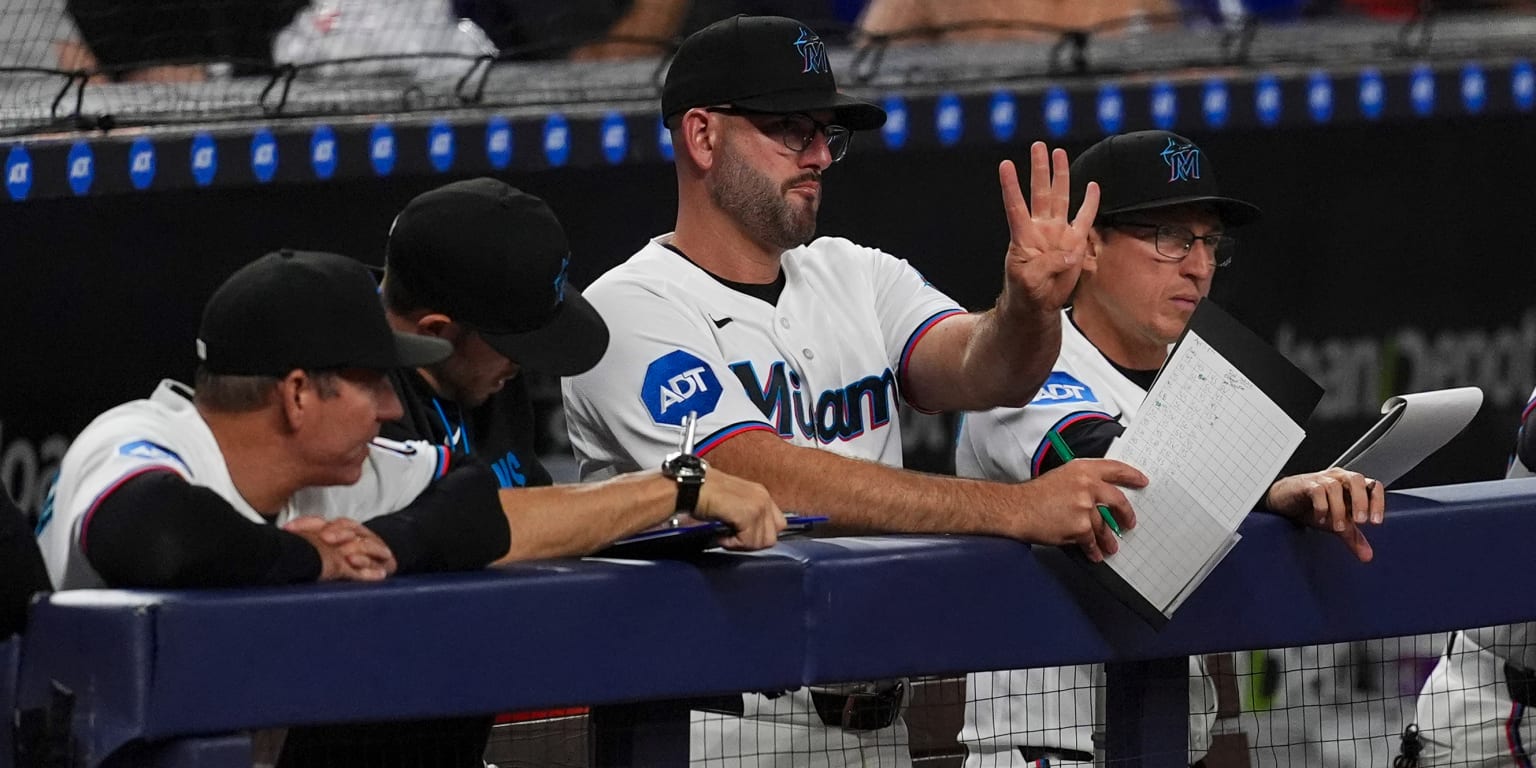
MIAMI - The Miami Marlins ran every pitch call through their dugout this season, an arrangement that placed first-year assistant pitching coach Rob Marcello at the center of an experiment with no modern Major League Baseball precedent across all 162 games.
Marcello, who held the same pitch-calling responsibility as Triple-A Jacksonville’s pitching coach in 2025, coordinated with a 12-member review group that included president of baseball operations Peter Bendix, general manager Gabe Kapler, director of pitching Bill Hezel, pitching coach Daniel Moskos, bullpen coach Brandon Mann, assistant director of baseball operations Jordan Jackson and vice president of baseball solutions Ryan Plunkett. Early in the season, the group held 30-minute review sessions after each game. By the end of the year, those meetings dropped to three times a week.
“It’s not just coaching, and then I think just being on the Major League level, it just adds in so much mental wear knowing every game does matter,” Marcello said. “I think about a long winning streak, and even those are draining, and then losing 12, those were just as draining.”
Pitchers shook off Marcello’s calls 10 or fewer times per game, with 10 being the extreme high. Tyler Phillips shook the least, while Ryan Gusto struggled early with sequencing. Calvin Faucher would shake and later tell Marcello he simply did not have a particular pitch working during bullpen warmups. Eury Pérez, working to build confidence in his secondary pitches, shook more than others - and eventually explained why in a direct conversation with Marcello.
“When you call a pitch and I throw it for a ball, and you call something else, I lose confidence in that you think I can’t throw the sweeper for a strike,” Pérez told Marcello. “I was like, ‘Oh, OK, that makes sense. That’s a real emotion,’” Marcello recalled.
When a pitcher did shake, the next pitch was decided between the catcher and pitcher. Marcello said he is already weighing whether to give pitchers a PitchCom device to click their own selection in those moments. “That’s another talking point of mine this offseason,” he said. “I don’t think it’ll happen, but do we give the pitcher a PitchCom so he can just click the next [pitch]?”
Because the system is unprecedented, Marcello had no peers to consult for guidance on managing the mental load. He reached out instead to A.J. Ellis, an 11-year veteran catcher, for the closest available perspective. “Obviously from last year you understand it’s going to be a lot,” Marcello said.
On accountability, Marcello drew a clear line. “I’ll take all the blame when they do bad, and they took all the positives when they did good,” he said. “At the end of the day, it comes down to pitch execution. I’m not throwing the ball.”
Marcello said the organization will spend the offseason evaluating how the review process might evolve, including whether more personnel should be involved and how to better incorporate player feedback into game-situation discussions.