
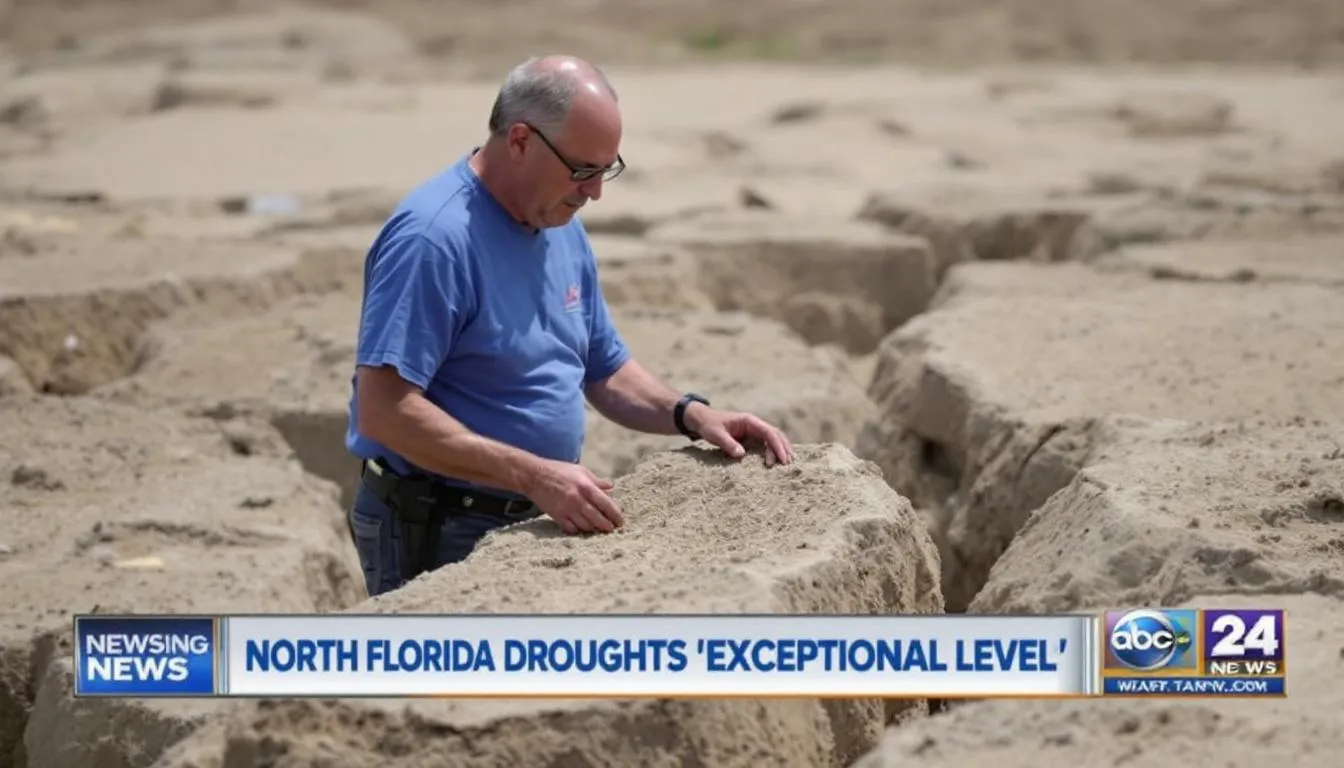
Parts of nine counties across North Florida reached exceptional drought status Thursday morning, marking the first time the region has experienced the worst possible drought level in 14 years. The counties affected include Grady, Thomas, Brooks, Lowndes, Echols, Madison, Hamilton, Suwannee, and Lafayette, stretching across the Big Bend and into South Georgia.
“Exceptional drought developed along the Florida-Georgia state line, where soil moisture and precipitation deficits worsened, and several streamflow gauges moved into record-low territory for mid-March,” the United States Drought Monitor said. Despite recent rainfall earlier this week, drought conditions have worsened across Northwest Tallahassee, the Big Bend, and South Georgia as water levels remain below normal.
For Leon County, rainfall totals are already 3.72 inches below normal for 2026, according to the National Integrated Drought Information System. This makes it the 20th driest year to date in the past 132 years, highlighting the severity of current conditions across the region.
Every county across the Big Bend and South Georgia has been in an extreme drought for weeks before parts of the region escalated to exceptional status. The Northwest Florida Water Management District issued a water shortage warning in February asking residents to conserve water. As of their latest Facebook post, they will not lift the order.
Although sporadic days of rain are helpful, they will not be enough to improve current drought conditions. The recent precipitation will only be enough to prevent the worsening spread of drought across the affected areas. Water levels in Everglades National Park are more than six inches lower than last year and over a foot lower than the year before that, demonstrating the broader impact of dry conditions across Florida.
The exceptional drought designation represents the most severe category on the drought monitor scale, indicating widespread crop and pasture losses, water shortages, and water restrictions. Streamflow gauges have moved into record-low territory for mid-March, creating additional concerns for water management officials across the region.
The Northwest Florida Water Management District continues to monitor conditions closely as the drought persists into spring. Officials have not announced when they might consider lifting the water shortage warning issued in February, as current rainfall patterns remain insufficient to address the significant precipitation deficits.