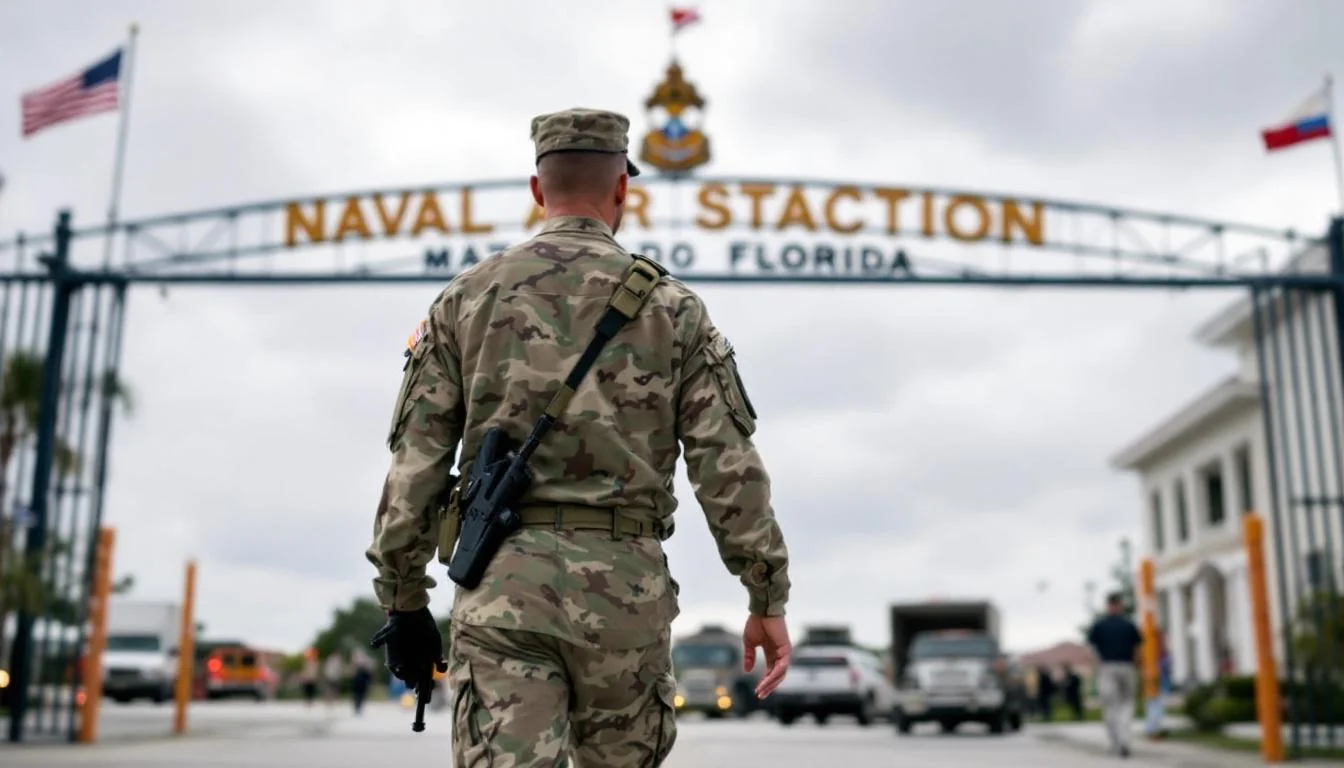
Defense Secretary Pete Hegseth signed a memorandum directing base commanders to allow requests from servicemembers to carry privately owned firearms onto military installations, including Naval Air Station Jacksonville. The policy marks a significant departure from historical military law that prohibited personal weapons on bases except for military police and authorized training activities.
“Effectively, our bases across the country were gun-free zones. Unless you’re training or unless you are a military policeman, you couldn’t carry, you couldn’t bring your own firearm for your own personal protection onto post,” said Pete Hegseth, U.S. Secretary of Defense. The new framework requires base commanders to allow requests with the presumption that carrying personal firearms is necessary for personal protection.
Hegseth specifically referenced the 2019 shooting at Naval Air Station Pensacola, which killed three people and injured eight others, as justification for the policy change. He also cited a shooting at Fort Stewart, Georgia, where an Army sergeant used his personal handgun to injure five soldiers before being tackled. The proposal follows several high-profile attacks on military installations that have raised security concerns.
A public affairs officer at Naval Air Station Jacksonville confirmed the installation has not yet received guidance regarding the policy from higher authority. Currently, most base security protocols limit weapons carrying to military police, and personally owned firearms are required to be stored and registered in authorized locations. Under the proposed framework, implementation would fall to individual base commanders, meaning rules and regulations could vary depending on the installation.
The policy change has drawn criticism from gun violence prevention advocates who warn of potential consequences. “If there is a problem with violent crime on these installations, then the Secretary of Defense has an obligation to alert the American people and describe how he’s working to prevent that crime,” said Tanya Schardt, Senior Counsel at the Brady gun violence prevention organization. Critics argue the policy could lead to increased gun violence and suicides among active duty personnel.
Hegseth announced that any denial of a servicemember’s request to carry a personal firearm must be explained in detail and in writing. The policy represents a significant shift in the military’s stance on personal firearms on bases, which have traditionally maintained strict weapon restrictions outside of specific training or law enforcement roles. Supporters argue the change will empower troops to protect themselves in emergency situations.
Servicemembers are urged not to assume they are authorized to carry a personal firearm onto base until official guidance is received. Personnel should check with their chain of command before making any changes to how they transport or carry weapons. The new policy allowing troops to carry personal firearms on military bases will go into effect immediately, with base commanders required to establish procedures for servicemembers to request and receive approval to do so.