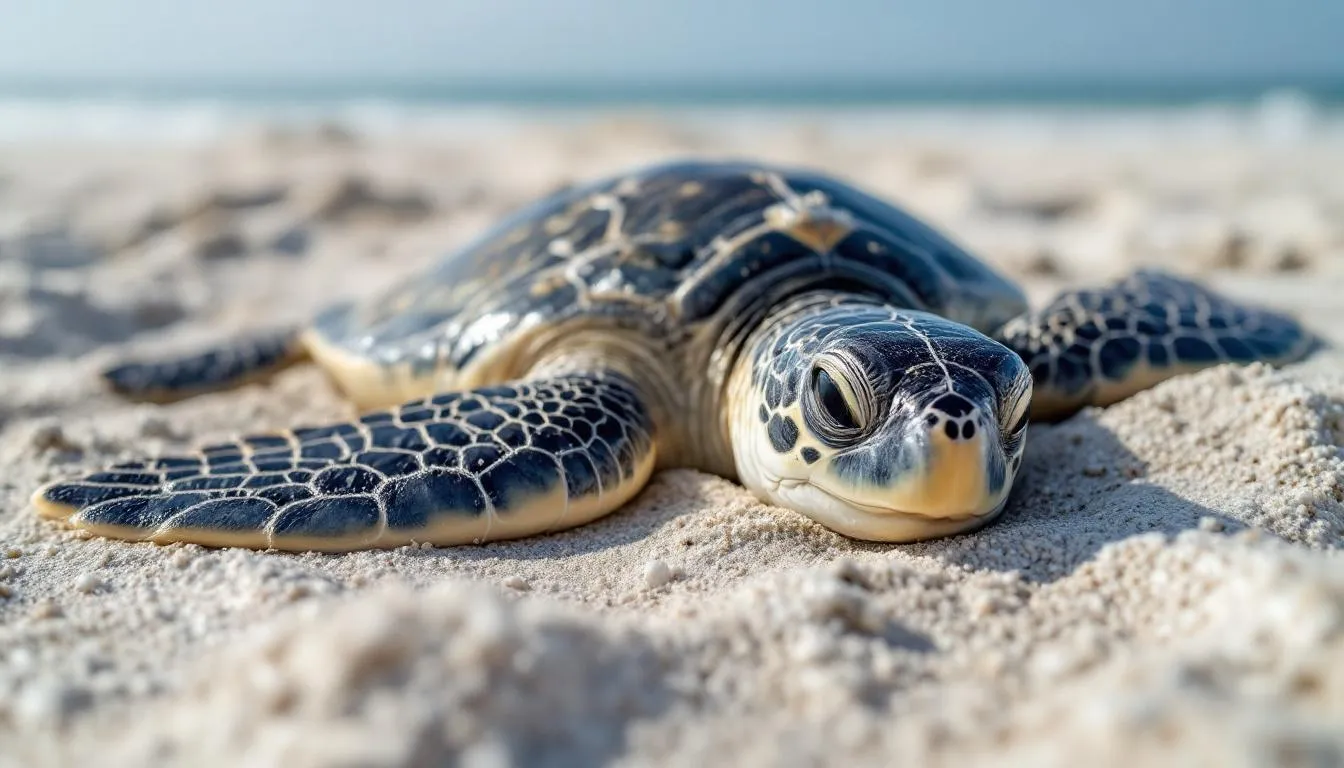
Sea turtle nesting season has begun across Pinellas County beaches, with officials emphasizing the need to keep shorelines clean, dark and flat during the six-month period that runs from May 1 through Oct. 31. County officials say the loggerhead is the species most commonly found nesting in Pinellas, with all seven sea turtle species listed as threatened or endangered. Pinellas County recorded a record 669 sea turtle nests in 2019, though officials say nesting numbers have declined since then, making each nest more significant.
Female turtles come ashore at night to dig nests with their rear flippers and lay 100 to 150 eggs at a time, with a single female potentially laying three to eight nests in one season. After roughly 45 to 70 days, hatchlings emerge and instinctively head toward the brightest natural horizon, traditionally the moonlight and starlight reflecting off the water. County guidance says only about one in 1,000 hatchlings survives to adulthood, which is why even small disruptions matter.
The biggest human-made problem facing sea turtles is artificial lighting, which can disorient hatchlings and draw them inland instead of toward the Gulf of Mexico. Under Pinellas County and Florida Fish and Wildlife guidance, beachfront lighting should be mounted low, aimed downward and shielded from the beach, while bulbs should use long-wavelength light in the amber, orange or red range. Florida Fish and Wildlife says the preferred standard is light at 560 nanometers or greater, with unnecessary decorative lighting shut off entirely.
Pinellas County says 12 of its 13 barrier-island municipalities have lighting ordinances intended to help hatchlings find their way to the water. On St. Pete Beach, city guidance tells beachgoers not to shine lights at turtles, not to use flash photography around them, and never to interfere with marked nests, which are protected under state law. St. Pete Beach promotes the phrase “Clean, Dark, Flat” as the easiest way to remember what helps most during nesting season.
“Clean” means removing trash, food waste, toys and gear from beaches before sunset, as obstacles can entrap and prevent sea turtles from nesting as they crawl across the sand. “Dark” means avoiding artificial light on the beach at night, since lights can misdirect and disturb nesting sea turtles and their hatchlings. “Flat” means filling in holes and knocking down sandcastles before leaving, as these small obstacles can trap hatchlings or block nesting females from reaching suitable nesting spots.
Monitoring efforts span the entire county, with Clearwater Marine Aquarium beginning patrols on April 15 and monitoring about 21 miles of beach using staff, interns and volunteers who search just before sunrise for tracks, nests and false crawls. In the southern part of the county, Sea Turtle Trackers volunteers patrol St. Pete Beach, Shell Key and Outback Key every day from May through October, marking and protecting new nests and responding year-round to stranded turtles.
Clearwater Marine Aquarium reported that along the beaches it monitors, the 2024 season produced 271 nests, up from 227 in 2023, but many active nests were later washed out by hurricanes. The Florida Fish and Wildlife Conservation Commission reminds residents and visitors that getting too close to nesting sea turtles can cause them to leave the beach before completing the nesting process, and it is illegal to harm or disturb nesting sea turtles, their nests or eggs, or to handle hatchlings.
Beachgoers can help by properly disposing of all trash, filling in human-made holes in the sand, and removing all beach toys, gear and furniture from the sand before sunset. Fishing line can be deadly to sea turtles, waterbirds and other wildlife, with monofilament recycling stations available at mrrp.MyFWC.com. Anyone who encounters a turtle, hatchling or disturbed nest should report sick, injured, entangled or dead sea turtles to the FWC’s Wildlife Alert Hotline at 888-404-FWCC.