
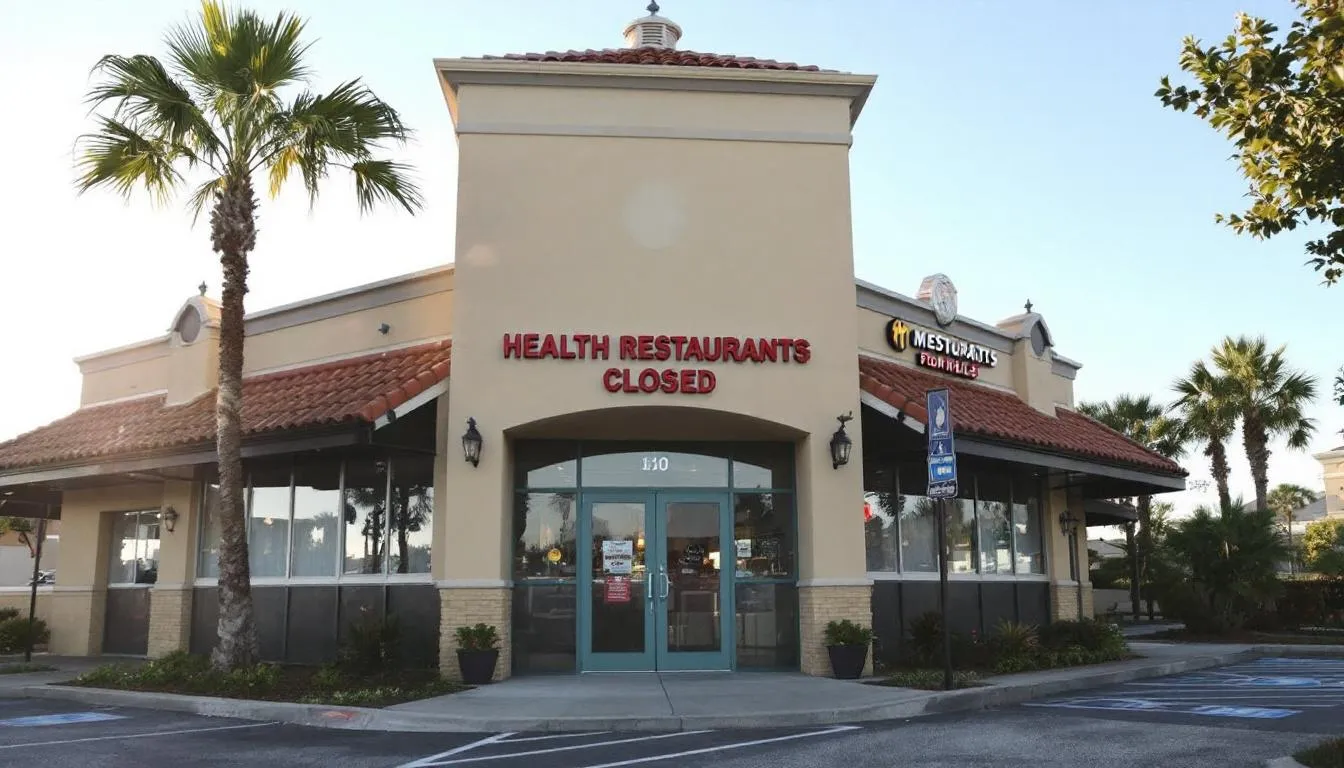
Seven restaurants across Central Florida were forced to close last week after health inspector visits revealed violations including rodent droppings, roaches, lack of potable water, and storage issues, according to state records. Most of the establishments were allowed to reopen within a day or two after meeting inspection standards.
In Clearwater, Little Caesars at 1712 Gulf to Bay Blvd. was closed on March 12 due to plumbing issues that left no bathroom available for customers or employees to use. The establishment also had objectionable odors in the front counter area near the bathroom and was operating without a Division of Hotels and Restaurants license. The restaurant met inspection standards on March 12.
A food truck in Clermont faced multiple violations when SnappyDogsFlorida at 16640 Cagan Crossing Blvd. was closed on March 10. The establishment was operating with no potable running water, had cooked onions prepared on an outdoor grill of a hot dog cart, and experienced a time/temperature violation for hot dogs. The food truck met inspection standards on March 16.
Orlando saw four establishments shuttered during the inspection period. Aquatica Theme Park Carts at 7007 Sea World Drive was closed on March 11 for operating with no potable running water and met inspection standards on March 12. Blue Magic Seafood and Oyster Bar at 629 N. Westmoreland Drive was closed on March 10 after inspectors found over 30 rodent droppings on the premises and bacon kept on non-food-grade paper towels. The restaurant met inspection standards on March 11.
Spark Orlando Universal Blvd at 7701 Universal Blvd. was closed on March 10 because equipment and utensils were not properly sanitized due to no running water at the three-compartment sink and dishwasher. The establishment met inspection standards the same day it was closed.
The most severe violations were found at New China St. Pete at 928 58 Street in St. Petersburg, which was closed on March 10. Inspectors discovered nearly 40 dead roaches and around 20 live roaches on the premises. The restaurant also had raw chicken stored over egg rolls in a reach-in cooler across from fryers, creating a cross-contamination risk.
The closures represent routine enforcement actions by the Florida Department of Business and Professional Regulation’s Division of Hotels and Restaurants, which conducts regular inspections of food service establishments throughout the state. Restaurants that fail to meet health and safety standards are required to close until violations are corrected and reinspection confirms compliance.
The quick turnaround times for most establishments to meet inspection standards and reopen demonstrates the effectiveness of the state’s enforcement system in addressing immediate health risks while allowing businesses to resume operations once violations are corrected.