
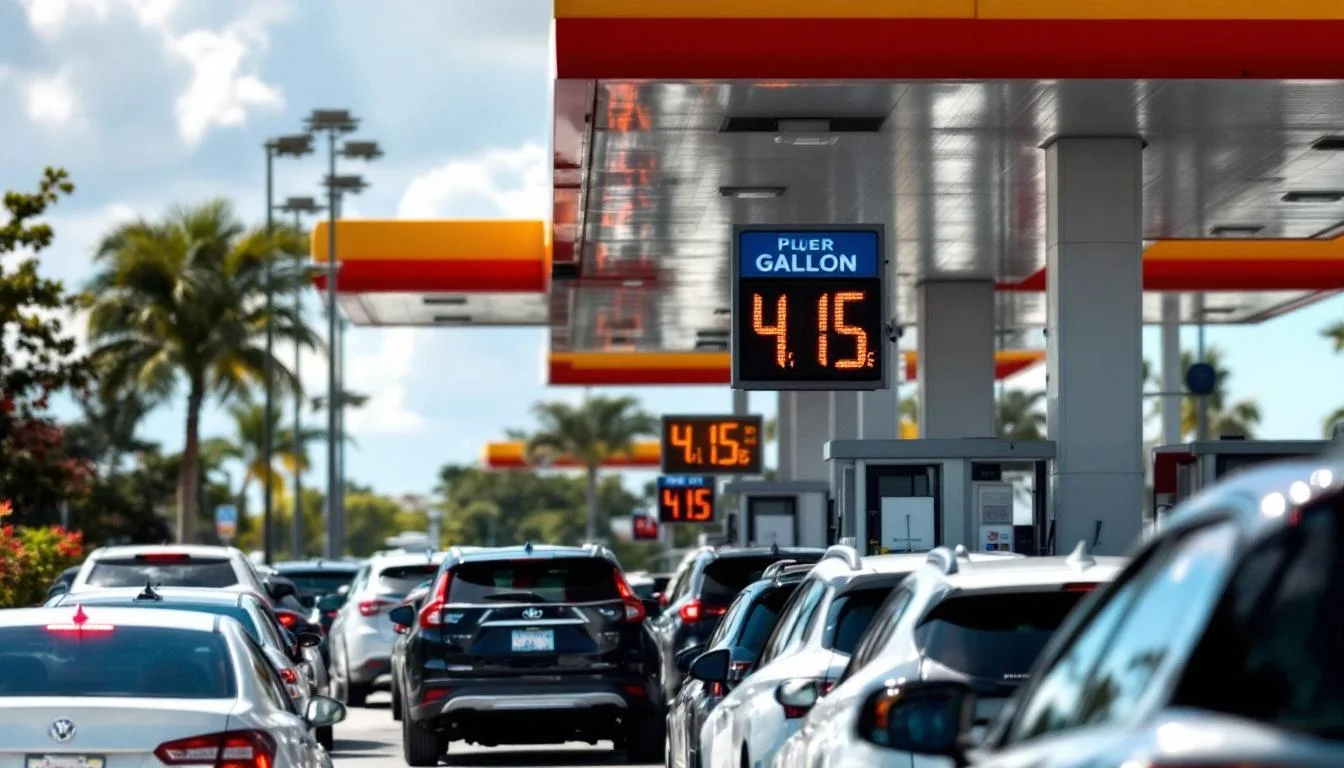
Gas prices in South Florida have surged to $4.15 per gallon for regular gasoline, marking an increase of about a dollar more than last year at this time as the ongoing war in Iran continues to impact fuel costs. The price spike has forced local businesses to make difficult decisions, with some shutting down operations entirely due to rising operational costs. U.S. Representative Debbie Wasserman-Schultz of Weston held a news conference to address the escalating situation and its impact on South Florida residents.
“Unfortunately, my company has lasted four months, and that’s it, I’m not taking any more orders, and I’m really sad about it and it’s all because of these high gas prices,” said Julie Fray, who started a floral bouquet delivery business in December. Fray’s business closure illustrates the direct impact of fuel cost increases on small enterprises across the region. The dramatic price increase has created operational challenges for businesses that rely heavily on transportation and delivery services.
Wasserman-Schultz directly linked the price surge to international conflict, stating that “the war in Iran has spiked gas prices and many other commodities upward.” The congresswoman criticized the current administration’s handling of the situation, arguing that “the brutal Iranian regime is a threat, I want to make sure that threat is eliminated, but Trump still has no clear objectives and no exit strategy for this war that he started.” Long lines have formed at Costco locations, where gas prices are currently at least 20 cents cheaper per gallon compared to most gas stations.
“Ironically, the big winners in all of this so far are oil companies and gas producers like Russia and Iran, who now pocket higher prices for every barrel they sell,” Wasserman-Schultz said during the news conference. The representative also pointed out that President Donald Trump recently lifted oil sanctions against Iran, creating what she described as a contradictory situation. “This gas crisis is so bad, Trump is funding the enemy we are at war with, it is insane,” she said.
President Trump addressed the war situation during a White House Easter event, praising military operations while flanked by First Lady Melania Trump and someone dressed as the Easter Bunny. “You don’t mind when the enemy is weak, but that enemy is strong, not so strong as they were about a month ago, in fact, I can tell you they’re not too strong at all in my opinion,” Trump said. The president also made bold predictions about the conflict’s timeline and potential outcomes.
“We’re doing unbelievably well, well at a level that nobody’s ever seen before, the entire country might be taken out in one night, and that might be tomorrow night,” the president said during a news conference following the Easter event. Trump has threatened to bomb infrastructure targets in Iran, including power plants and bridges, unless Iran surrenders. However, administration officials have not clearly defined what would constitute surrender or whether reopening the Strait of Hormuz to oil tankers would be sufficient.
The current situation has created uncertainty about both the duration of elevated gas prices and the war’s resolution. Questions remain about whether Iran’s regime would need to be removed from power or if restoring pre-war oil shipping conditions through the Strait of Hormuz would satisfy U.S. objectives. The administration has not provided clear metrics for measuring success or establishing an exit strategy from the conflict.
South Florida residents continue to face the economic burden of higher fuel costs as the situation develops. The regional impact extends beyond individual consumers to affect local businesses, delivery services, and transportation-dependent industries. The next phase of the conflict and its impact on regional gas prices remains unclear as diplomatic and military options continue to be evaluated.