
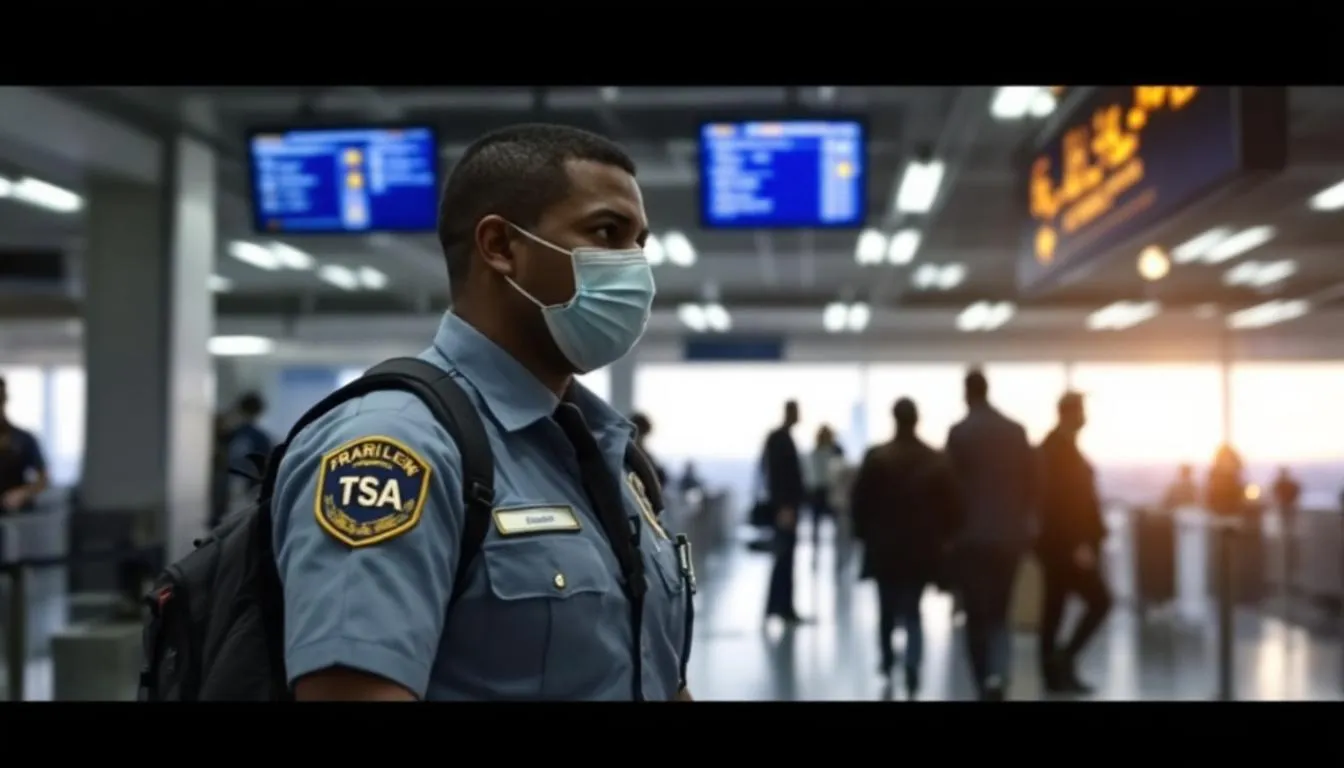
The Transportation Security Administration is warning that some Florida airports may have to close temporarily due to staffing shortages caused by the partial government shutdown of the Department of Homeland Security. TSA agents will miss their second full paycheck Friday, and more than 480 TSA employees have quit during the shutdown. Multiple airports are experiencing callout rates higher than 40%, creating what officials describe as the highest wait times ever recorded.
“We are being forced to consolidate lanes and may have to close smaller airports if we do not have enough officers. It’s a fluid, challenging and unpredictable situation,” said Ha Nguyen McNeill, Deputy Administrator of the TSA. More than 3,100 TSA employees nationwide did not show up for work Tuesday, according to the Department of Homeland Security. Air travelers are facing unprecedented delays as the agency struggles to maintain operations with reduced staffing levels.
While most Florida airports grapple with federal TSA staffing shortages, Orlando Sanford International Airport continues operating smoothly through a private security model that has insulated it from the shutdown’s effects. George Speake, the airport’s deputy CEO, said wait times have averaged about six minutes during the crisis. The airport has participated for more than a decade in the TSA’s Screening Partnership Program, which allows private contractors to handle security screening under federal oversight.
“The training they go through and what they do on a daily basis is identical to what federal screeners do,” Speake said. “The folks that actually do the screening are not TSA employees. They work for that vendor. They go through the exact same training. There is really no difference other than the uniform.” Under the program, private screeners are employed by third-party contractors while TSA managers remain on site to oversee operations and ensure compliance with federal standards.
Passengers at Orlando Sanford International Airport reported minimal delays despite widespread disruptions elsewhere. “I’m very excited that I don’t have a long line to wait,” said traveler Connie Goodnite, who drove from The Villages for her flight. “I had spoken with a friend of mine who had flown out of this airport earlier and she said no problems.” Other passengers echoed similar experiences, noting that security lines moved quickly despite travel disruptions at airports relying on federal TSA employees.
Speake emphasized the cost-effectiveness of the private screening model during the current crisis. “You get the same product at a cheaper price, and it’s a contract, so these folks keep getting paid,” he said. The private contractors continue receiving compensation even as federal TSA employees work without pay during the shutdown. In addition to Orlando Sanford, airports in Sarasota and Punta Gorda also participate in the TSA’s Screening Partnership Program, providing them similar protection from federal staffing disruptions.
Gov. Ron DeSantis voiced support for expanding private security operations to more Florida airports during the ongoing crisis. Over the weekend, DeSantis posted on social media questioning the effectiveness of federal TSA operations and advocating for private alternatives. “Is there evidence that creating TSA has made air travel safer over the past 25 years?” DeSantis wrote. “If not, then why not let the airlines and airports handle it? Why give politicians the power to play games with the travel of our people?”
The Trump administration has deployed ICE and other federal agents to some airports to address the staffing crisis, though their specific roles remain unclear. These agents have been spotted working at baggage claim, patrolling lines, and walking through terminals. White House Border Czar Tom Homan said these agents will not be using X-ray machines and screening bags because they are not trained for that specialized work. The deployment represents an emergency measure as traditional TSA operations face unprecedented strain.
President Donald Trump floated the idea Wednesday of sending the National Guard to airports to assist with crowd control, though timing for such deployment remains unclear. The consideration of military assistance underscores the severity of the staffing crisis affecting airport security operations nationwide. Senate Majority Leader John Thune showed no movement toward a deal to end the Department of Homeland Security shutdown, despite mounting operational challenges and the approaching second missed paycheck for federal workers.
The crisis continues escalating as TSA officials warn of potential temporary airport closures if staffing levels deteriorate further. With callout rates exceeding 40% at multiple facilities and hundreds of agents having permanently left their positions, the agency faces its most severe operational challenge since its creation following the September 11 attacks.